Insights
- Solving Supply Chain Vulnerabilities & Trend Lag: By slashing raw material transit times from 3+ months to local instant access, the facility protects 600+ domestic garment makers from global transport bottlenecks, changing fashion trends, and foreign currency drain.
- National Blueprint for Industrial Modernization: Positioned as a real-world case study for the government, Atharv Textile proves that solving Nepal's industrial challenges relies on modern robotics, fast local supply chains, and private sector agility—not just subsidizing outdated public factories.
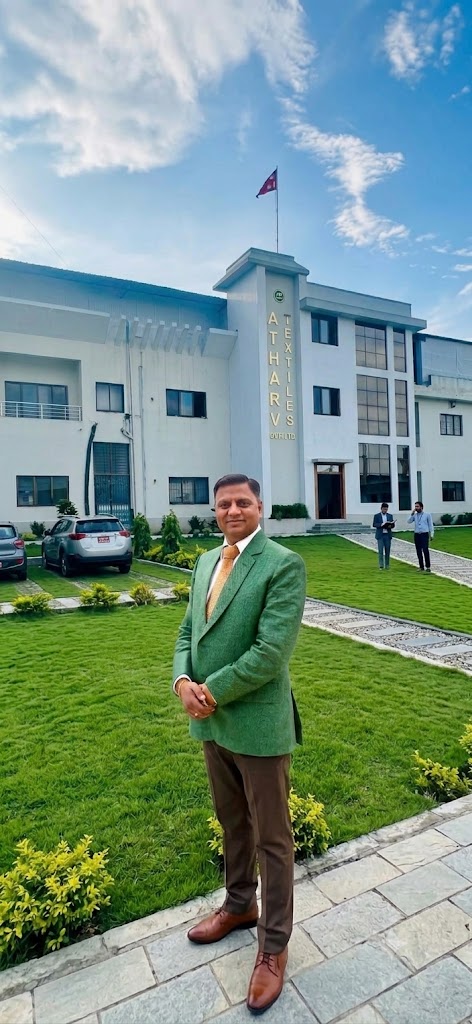
This time, the government is advancing a plan to re-operate [public textle factories] by directly providing a budget. There is an ongoing debate over whether it will succeed, and the government itself is not confident. In such a scenario, to find the answer to what a modern textile industry should look like, one only needs to look at Atharva Textile established in Rautahat and its founder, Dr. Shambhu Kumar Chaudhary.
He has started operations with the ambitious goal of addressing domestic market demand while also exporting to neighboring countries. However, this industry was not established out of a sudden or hasty plan.
During the COVID-19 pandemic, domestic garment industries had to halt production due to a shortage of raw materials. Dr. Chaudhary observed the situation where imported materials arrived months late, affecting exports as well. He saw that crisis as an opportunity in the textile business. Leaving the medical profession, he changed his career path toward business.
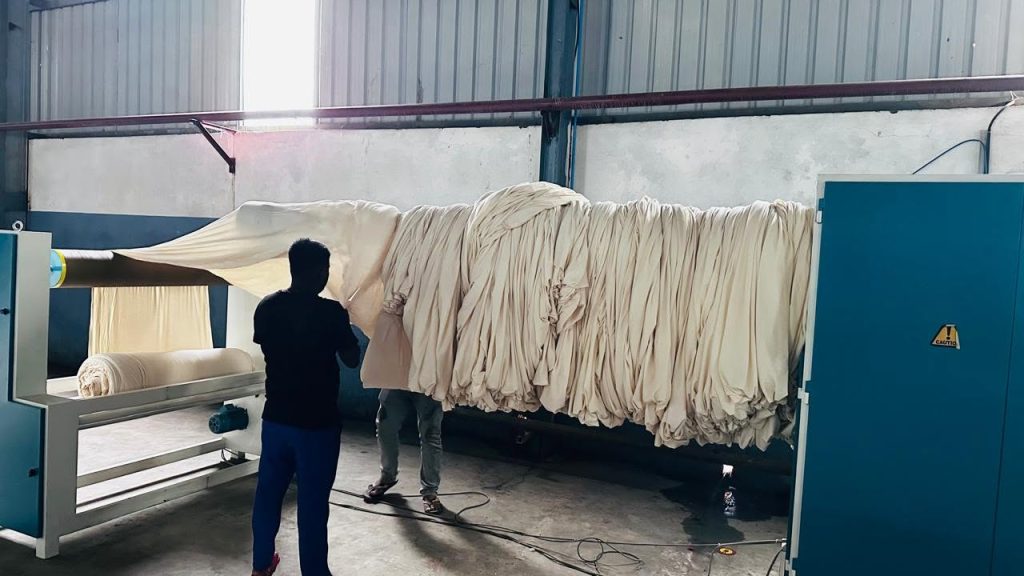
Having changed his professional field during the corona pandemic, he decided to establish a modern textile industry in Rautahat. After a three-year construction period, Atharva Textile—which came into operation last week in Brindaban-6, Harshaha—is now engaged in production with the goal of providing quality fabric to the Nepali garment industry within the country.
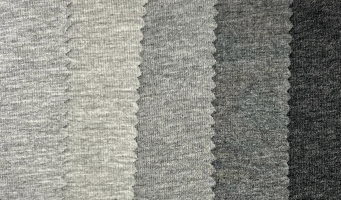
According to Chaudhary, this is the first knitting textile industry established in Nepal equipped with ultra-modern technology and a robotic system. It produces most of the knitted fabrics required in the market, including bedsheets, curtains, shirts, jackets, pants, coats, and medical-grade fabric.
"Our goal is not just to produce fabric," says Chaudhary. "It is to make the raw materials required by the Nepali garment industry available within the country, reduce import dependence, and produce international-quality fabric." Although the daily production capacity of the industry is 25 tons, it is currently producing around 10 tons of fabric daily. He shared that preparations are underway to gradually increase production according to market demand and operate at full capacity.
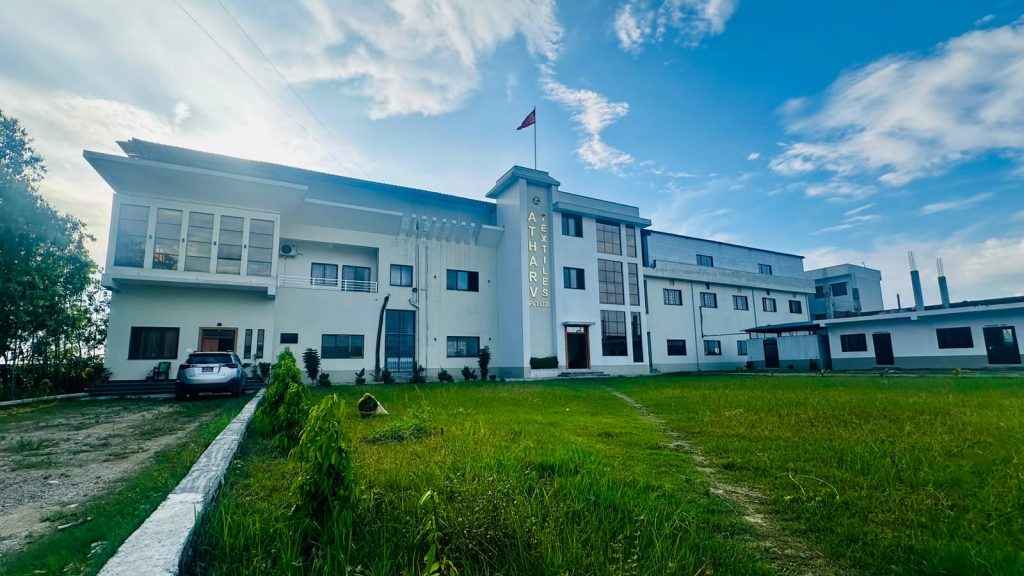
According to Chaudhary, Nepal still imports large quantities of raw materials from China and India for fabric production. This not only drains foreign currency but also creates a situation where industries are affected when supply chain disruptions occur. "Even if we can substitute just 20 percent of current raw material imports, it will provide great relief to the country," he says. "Money going abroad will be saved, industrialists will get materials on time, and production costs will drop."
Chaudhary notes that the difficulties faced by domestic garment industries during the COVID pandemic served as his inspiration to establish the textile factory. "Back then, materials imported by industrialists wouldn't arrive for months. Many had to stop production," he recalls. "After that, I came to the conclusion that if quality fabric could be produced within Nepal, it would relieve industrialists, create jobs, and reduce imports."
According to him, due to international conflicts, transport bottlenecks, and border route issues, imported materials currently take more than three months to reach Nepal. By that time, market fashion trends change, causing the garment industry to lose its competitive edge.
"Nepali consumers' fashion preferences change very quickly," Chaudhary states. "When goods arrive late, the market has already shifted. That is why producing fabric in Nepal is a current necessity." According to him, over 600 large garment industries are operating in Nepal. He believes that if even a small portion of their requirements can be met, a textile industry can be sustained long-term.
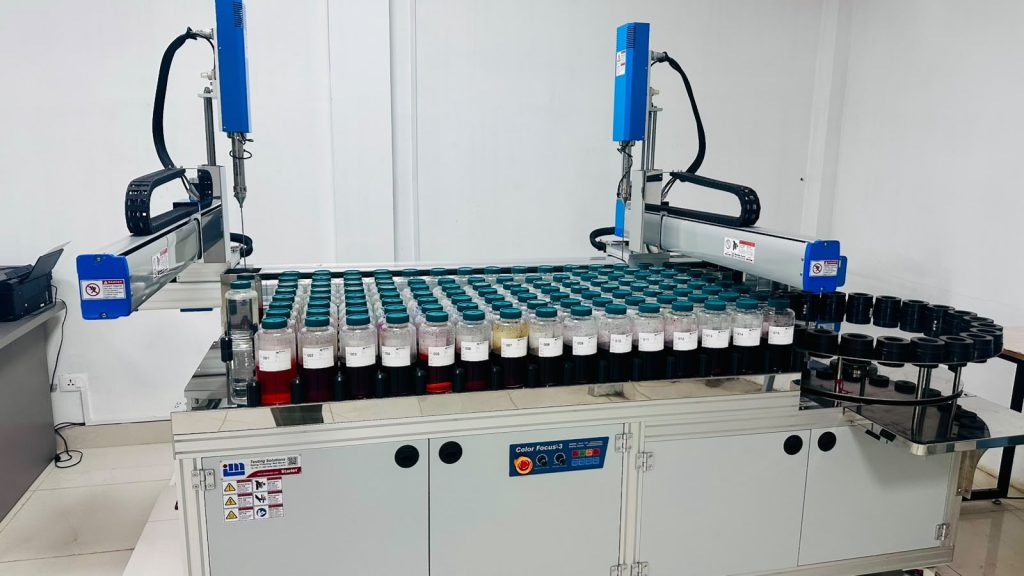
He mentions that choosing Rautahat to set up the industry was tied to emotional connection and local development. "Since I am from Rautahat myself, I had decided early on to bring a major industry to my home district," he says. "Furthermore, establishing an industry in a less developed area rather than a developed one stimulates the local economy."
An investment of around 1.5 billion NPR has been made so far in his industry, which spans an area of about four bighas. Chaudhary states that an additional investment of over 2 billion NPR will be required to run it at full capacity. "Currently, we have started production with a minimal workforce and limited machinery," he says. "As we expand capacity, additional machinery, manpower, and investment will be required."
Currently, more than 100 people have received direct employment in the factory, and it is expected that around 250 people will get direct employment once it operates at full capacity. He is confident that even more indirect employment will be generated.
"We want to create an environment where Nepalis who learned textile skills abroad can return and work in this very industry," Chaudhary says. The knitted fabric produced by Atharva Textile is claimed to feature characteristics such as being lightweight, flexible, comfortable, and wrinkle-resistant. According to Chaudhary, there is also a vision to transition civil servants' traditional attire into modern knitted fabrics in the future.
"This fabric feels cool in the summer and warm in the winter," he says. "Because it is lightweight, flexible, and durable, its usage is gradually increasing."
News Credit and Details: bizmandu.com